Remember the lovely spiritual ‘Amazing Grace’ that features the words
‘I once was lost, but now I’m found…Was blind, but now I see!’
Traveling does seem to involve a lot of recovery – of relationships and vision.
I arrived in Bolivia a little over a week ago with the hope of reconnecting with my generous hosts and mentors from past and present.
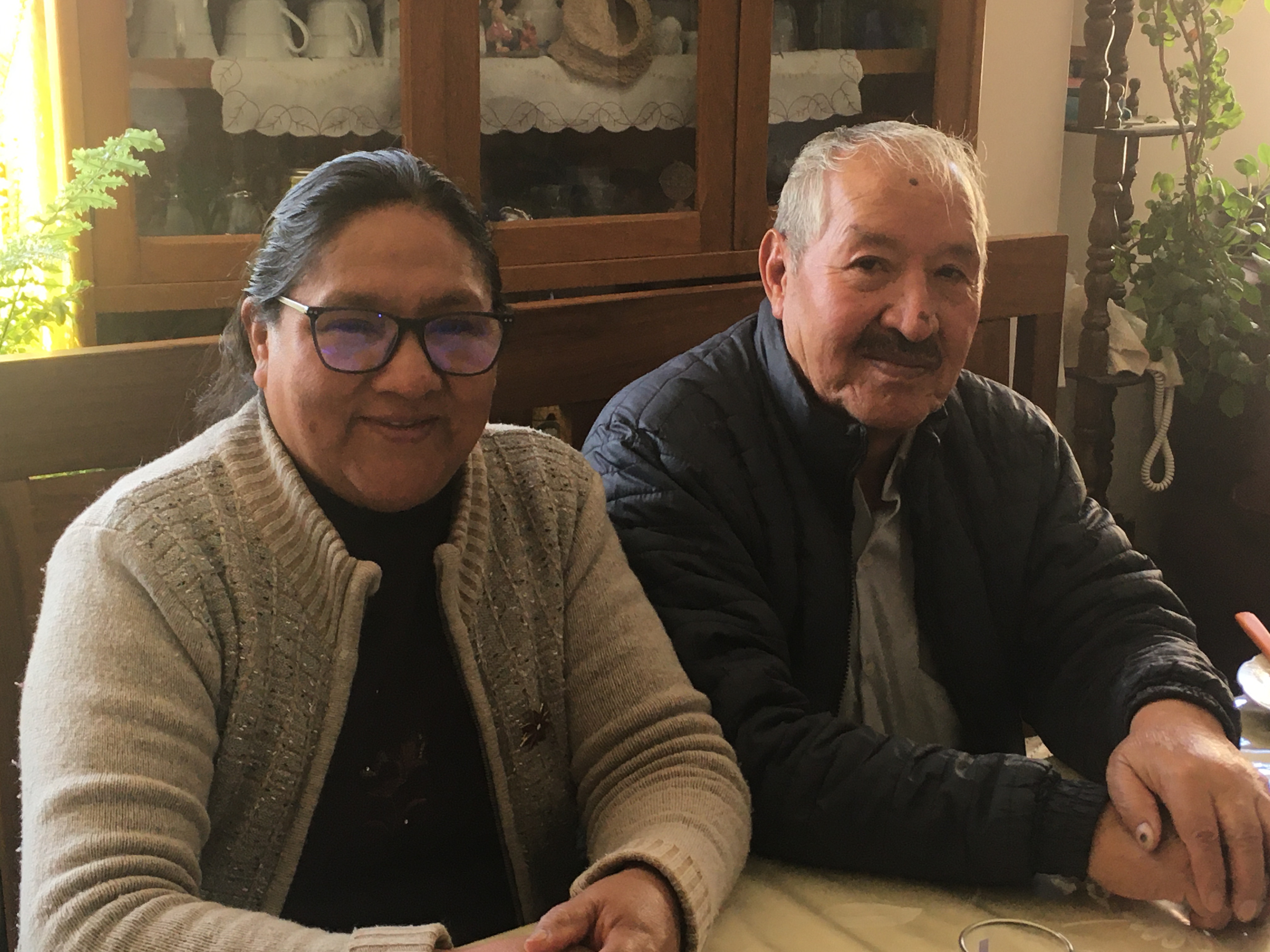
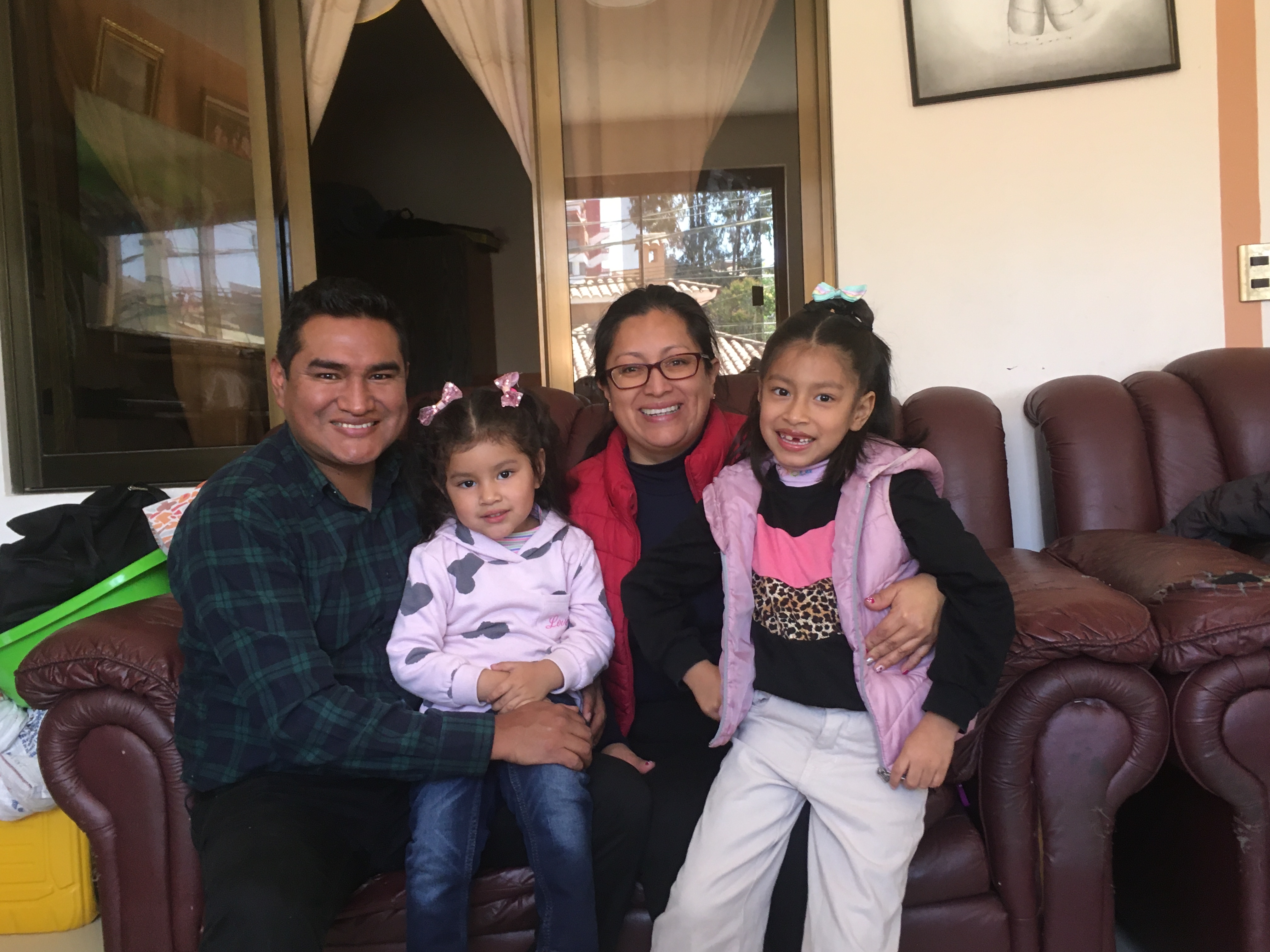
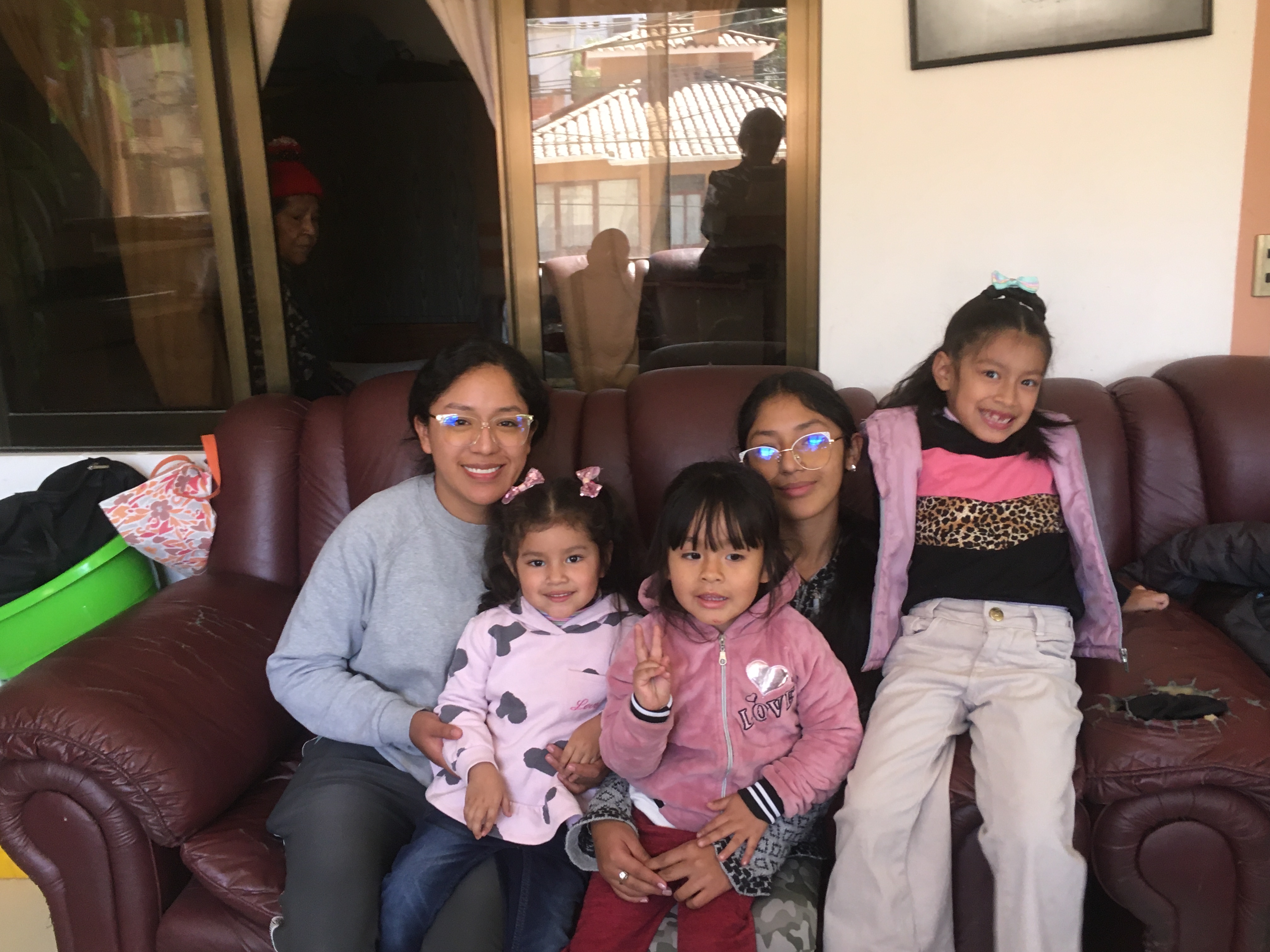
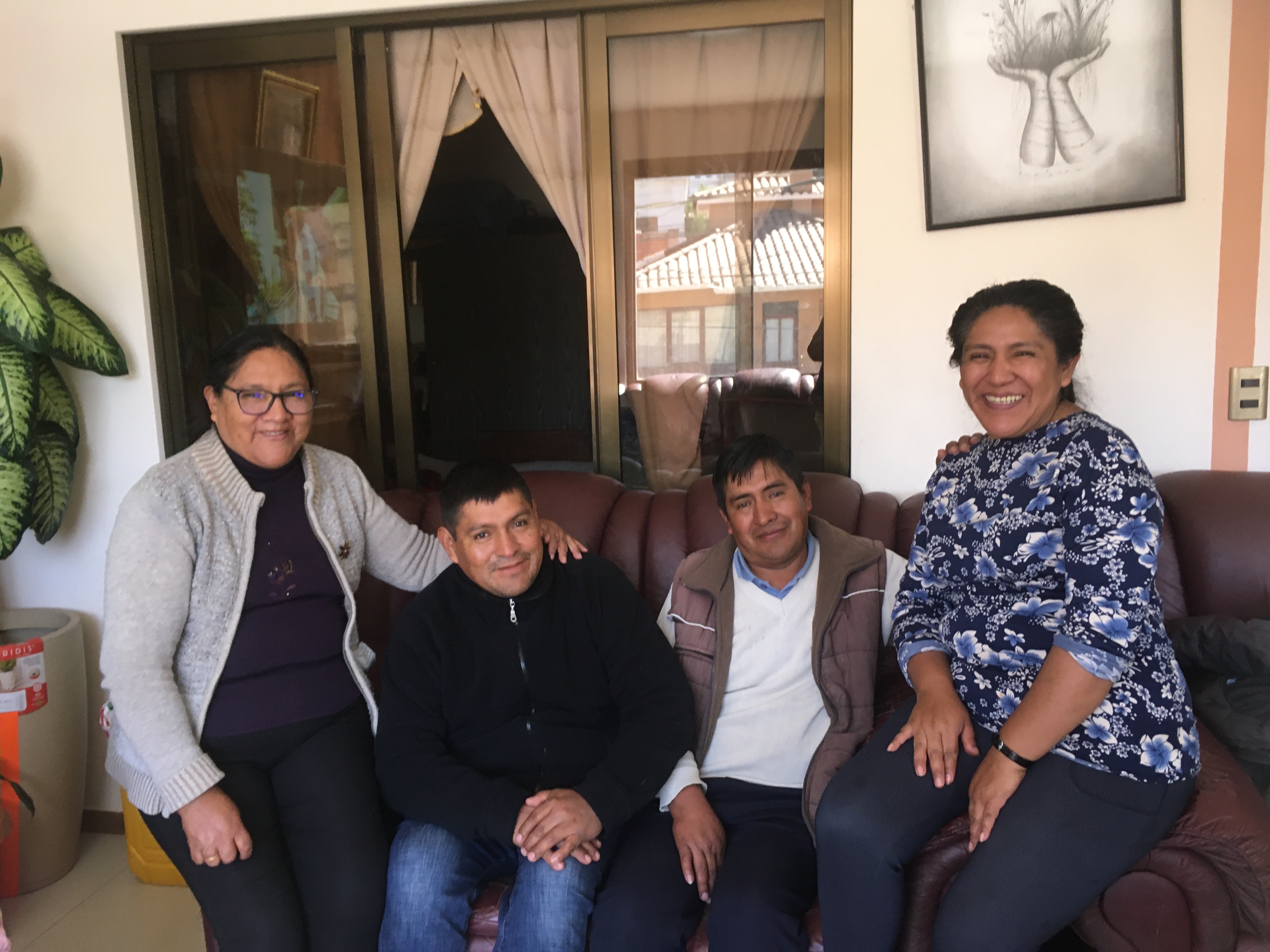
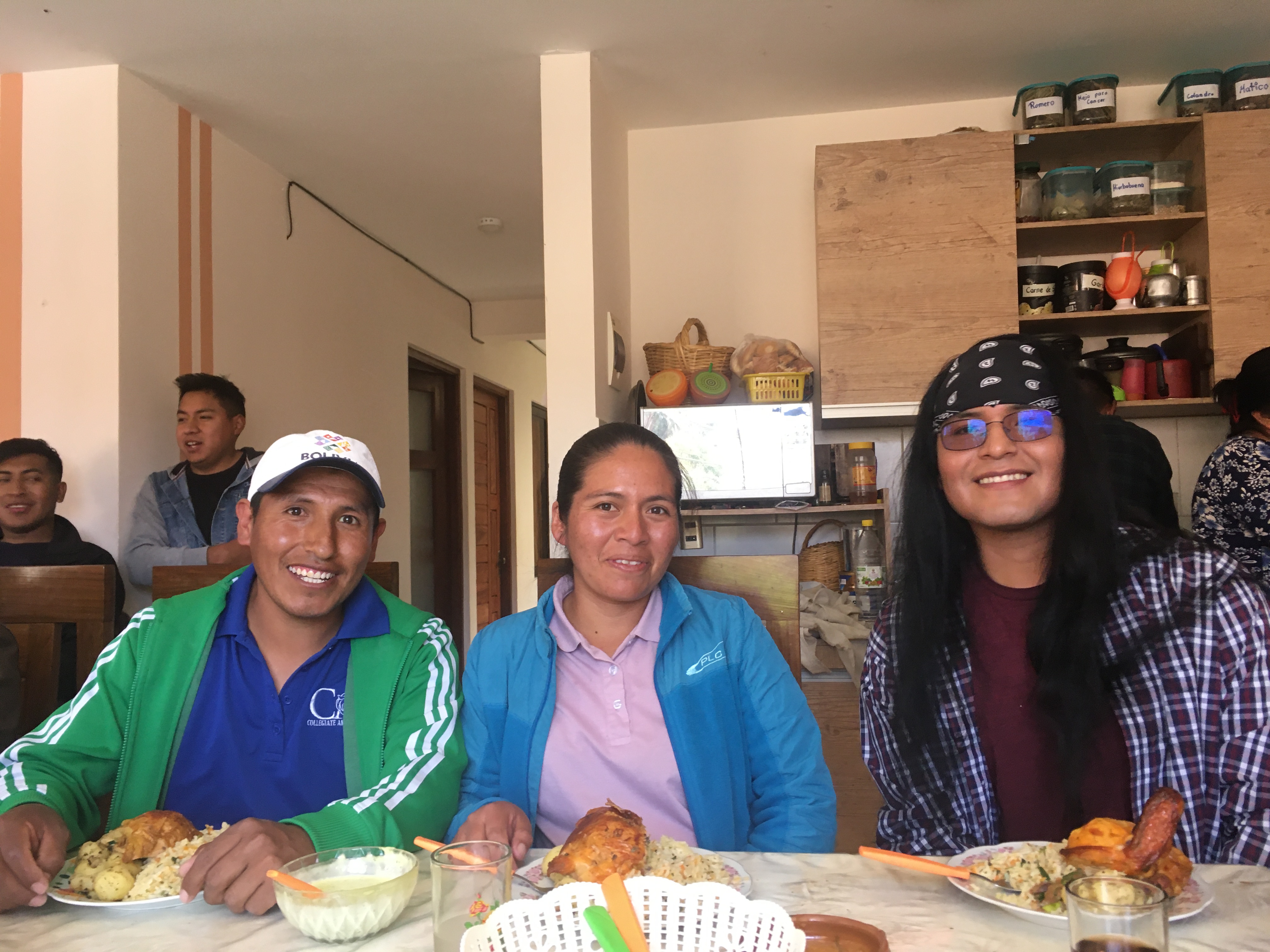
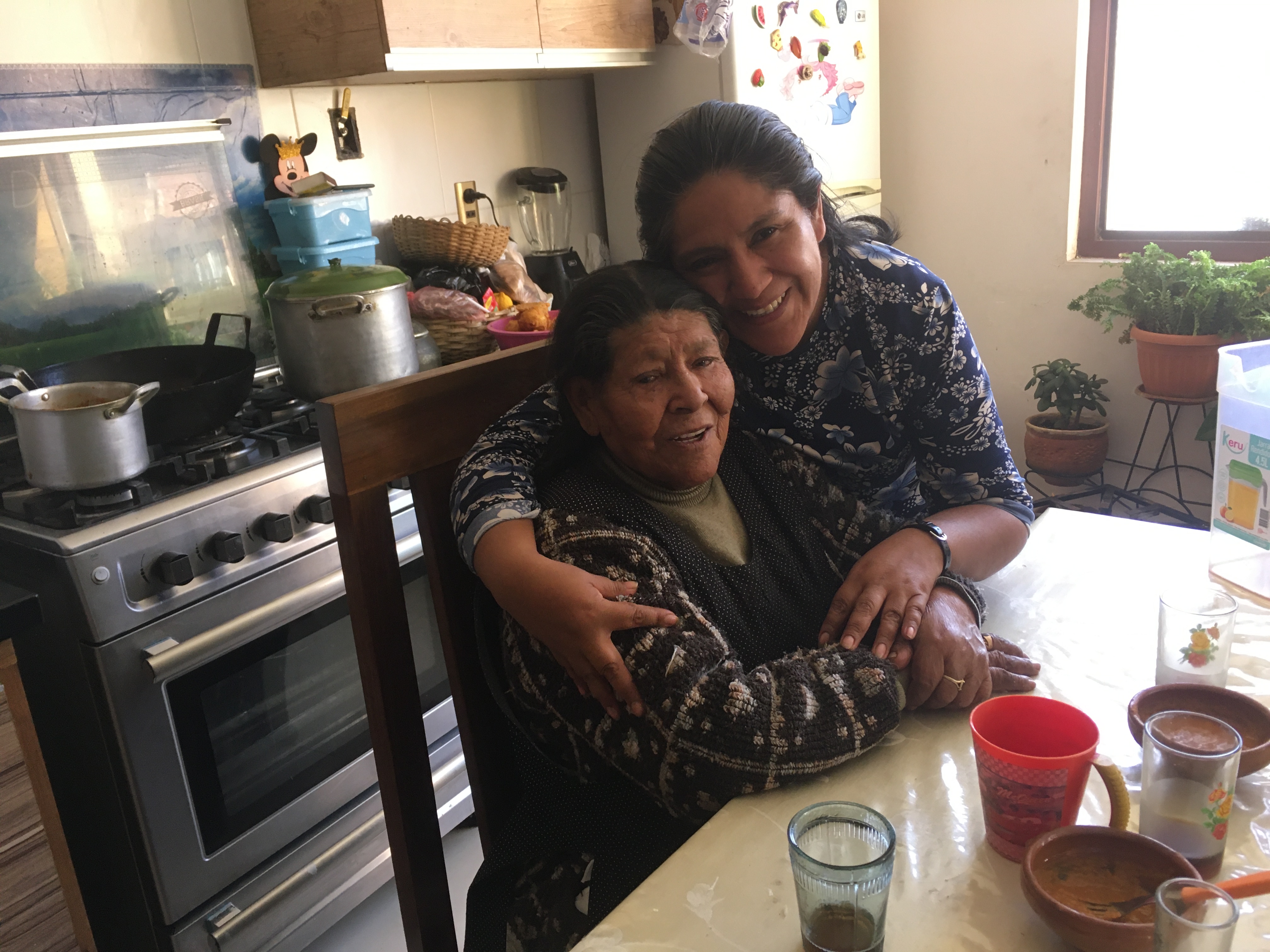
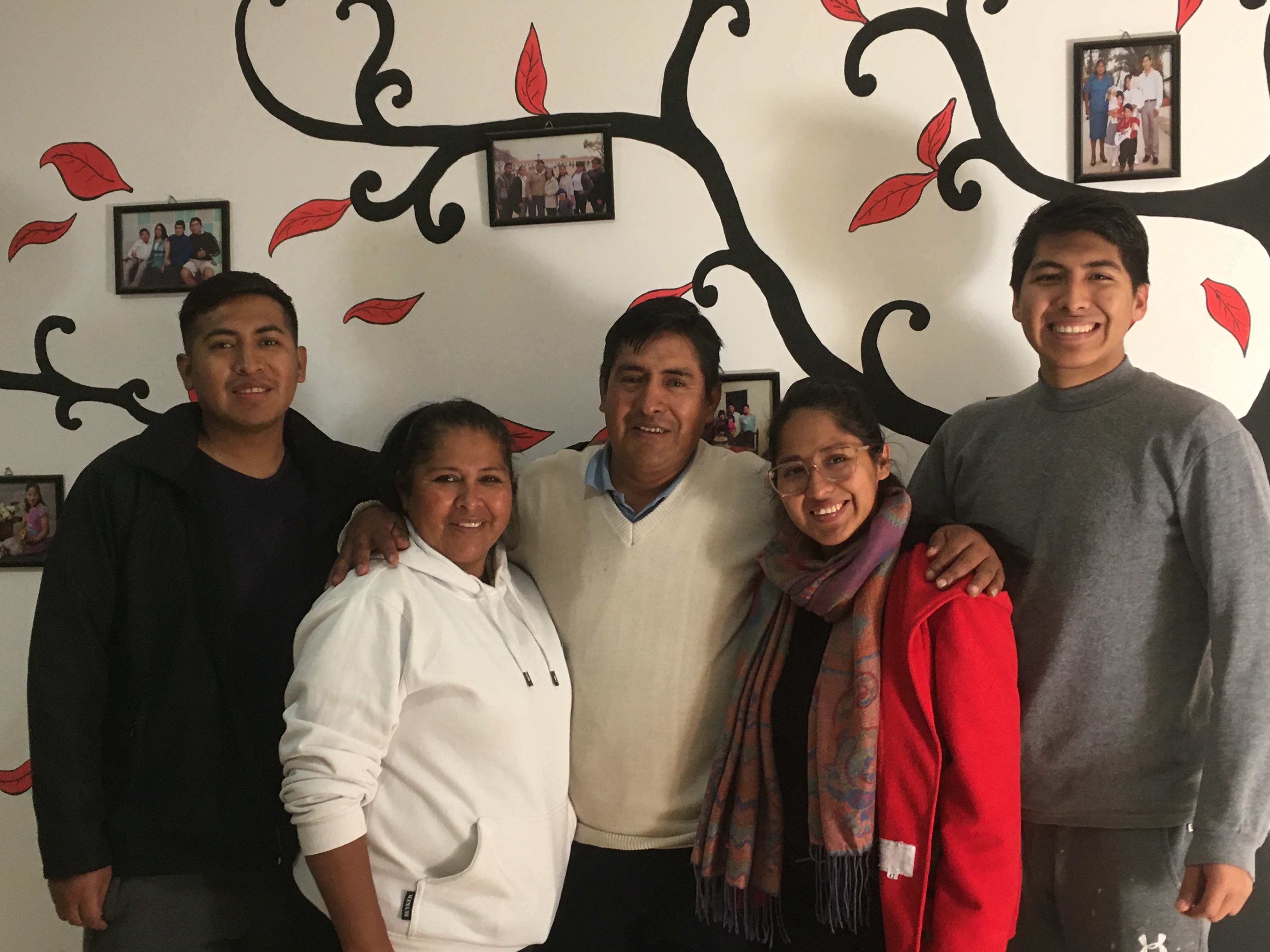
I started with my host sister and family in the city of Cochabamba – when I lived with her for a year in 1976 the city had 200,000 inhabitants and now it is over two million. Back then, close to 75% of the population identified as indigenous and practiced agriculture and mining in the countryside and a few small urban centers. Now I share the table with grandparents who speak Quechua, contemporaries who may or may not speak it, and youth, children who say they don’t understand.
From our shared bedroom window Miriam and I could see the Cerro San Pedro – now it is nearly blocked by a few tall apartment buildings and a large white statue of Christ stands with outspread arms, competing for size with the one in Brazil. Despite all these changes, something in me stirs every time I come here and look up at the mountain range that runs along this high valley city.
The week in Cochabamba was rich with personal and professional rekindlings. In addition to introducing our sponsored scholar Carlos Flores Quispe to my host sister’s family, we visited the Centro de Investigacion ProEIB Andes at the Universidad Mayor de San Simon, where I’ve been welcomed as a visiting researcher once again. We met with Dr. Pedro Plaza Martinez, now nearly an octogenarian and beloved by myself and virtually all of my academic and educator activist friends who speak Quechua. Dr. Vicente Limachi, whom I met as a fellow grad student in 2000, now heads the graduate program there. Dr. Marina Arratia is working with him to start a new online master’s program in Bio-Cultura. Their colleague Dr. Fernando Galindo was away but we remain in touch. I still frequently use his method of cultivating students’ exploration of their own cultural and linguistic identities through in-class interviews, essays and autobiographical presentations.
On Wednesday Carlos and I returned to the University to meet with the dynamic Quechua language teacher Julieta Zurita, whose former students are now spread around the Andes and US as linguists, educators and participants in various governmental and non-governmental organizations. Our sponsored scholar Gaby Gabriela Vargas is a former student of Julieta’s, and it was great to catch up.
But wait – this blog was supposed to be about lost luggage!!
So let me get right to the point.
After the pandemic, many of us lost a bit of our nerve for travel and for meeting up with people in less-than-familiar situations. We also lost some confidence in our own health and strength. So I decided to give myself a week to acclimatize to the altitude and multicultural, multi-class, multi-racial fabric of Bolivia before heading off to connect with people in rural areas.
On Wednesday afternoon I regained my own sense of the city enough to take a bus on my own rather than a taxi while running errands. I got directions from a woman on the street and hopped on the bus and found my way on foot back to the house. On Wednesday evening, Carlos and I got on a plane to the city of Sucre, arriving after dark. Again we faced the choice: bus or taxi? (to get down to the city from the airport). We chose the bus. The driver and assistant put our suitcases on the roof and we waited for the bus to fill up with passengers. Part way down the mountain Carlos told me he would be getting off to head to his own house that he shares with his brothers close to the city. I didn’t panic because I’ve often traveled alone in the city of Sucre.
I was the last passenger on the bus and the driver pulled my luggage off the roof – except one suitcase he gave me was not my own! And since I was the last person on the bus, the driver insisted that it must be my bag, but it wasn’t. A slightly drunk man on the street suggested that I take a photo of the driver’s license plate and call the police. But instead, I asked the driver for his name and phone number, and he assured me that nothing would be lost. I should come back to the Plaza Camargo at 7:30 am where the driver’s union meets, and my bag would be found. Since the bag contained a donated projector for one of our communities plus most of my clothes, I was a bit concerned and told him I would wait for the bag’s return to pay the $1 fare (10 bolivianos). I took the rest of my bags and got in a taxi, heading to a friend’s place for the night.
Sure enough, when I got to the bus driver’s union stand in the morning, the driver was off giving rides to others, but my bag had been returned. I left my fare with the driver who attended to me, and exchanged the other bag which I am sure they returned to its rightful owner. I’m sure my bag had been grabbed in error by a family traveling with elders and small children.
I guess this is a lesson in confidence and trust.
Get up your nerve, treat people with kindness and respect, and others will do the same. Good things keep happening.
 Yachay Simi (Wise Language)