Monthly Archives: August 2024

On the hot seat

At the Universidad Mayor de San Francisco Xavier, Sucre, Bolivia

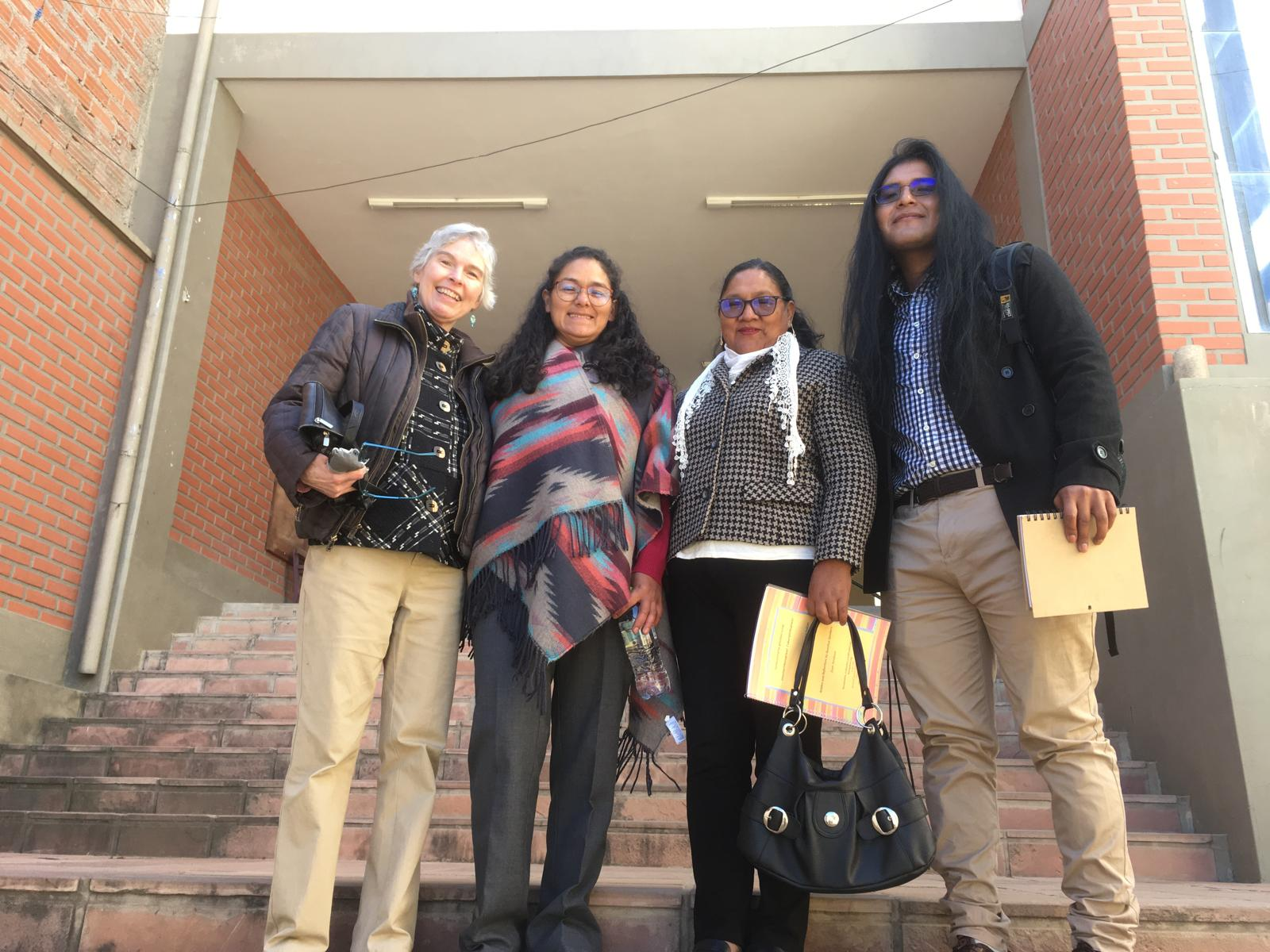
The Universidad Mayor de San Francisco Xavier, founded in 1624, is the nearest public university to residents of the small communities surrounding Tarabuco municipality. It is also Carlos Flores Quispe’s alma mater; he grew up in a farming and weaving community a few hours away. Carlos, María del Carmen Bolívar and I gave an invited talk at the University for students and faculty of the Language department on July 24.

Initially we feared we would have a small audience since it was the first day back from winter break. But the auditorium quickly filled up and there was standing room only. More than one hundred thirty students and a dozen professors of Quechua, English and French were in attendance.

Our presentation was based on the rural Andean experience of the cycle of cultivation and the fact that we are profoundly nurtured by what we cultivate – a relationship that is at once demanding and rewarding. We urged the audience to continue to care for their own indigenous languages, and we shared the various ways our diverse team has been doing so.

Students wanted to know in what ways learning or re-learning their ancestors’ Quechua language could possibly benefit them. Indifference and outright discrimination are the order of the day; everywhere we go, we hear of parents who opt for their children to speak only Spanish, and teachers who feel that teaching in and about the ancestral indigenous language is an unfair burden.

The three of us spoke from different perspectives about the advantages of knowing the language, rooted in ancient and current lifeways. Our responses must have been convincing, since professors reported that a number of students signed up to study Quechua after the talk.

Some of the elder Quechua experts objected to the way we had spelled certain transcriptions. Ah, the eternal debate over writing systems! It continually generates more heat than light. People get angry when they feel that a particular choice of spelling is an insult to their local dialect or to the integrity of their culture. They seemed satisfied, though, when we pointed out that all of our interview videos have been published online via a non-commercial indigenous language archive, and that anyone is free to produce a new transcription or analysis in the writing system of their choice.
Gratifying surprise

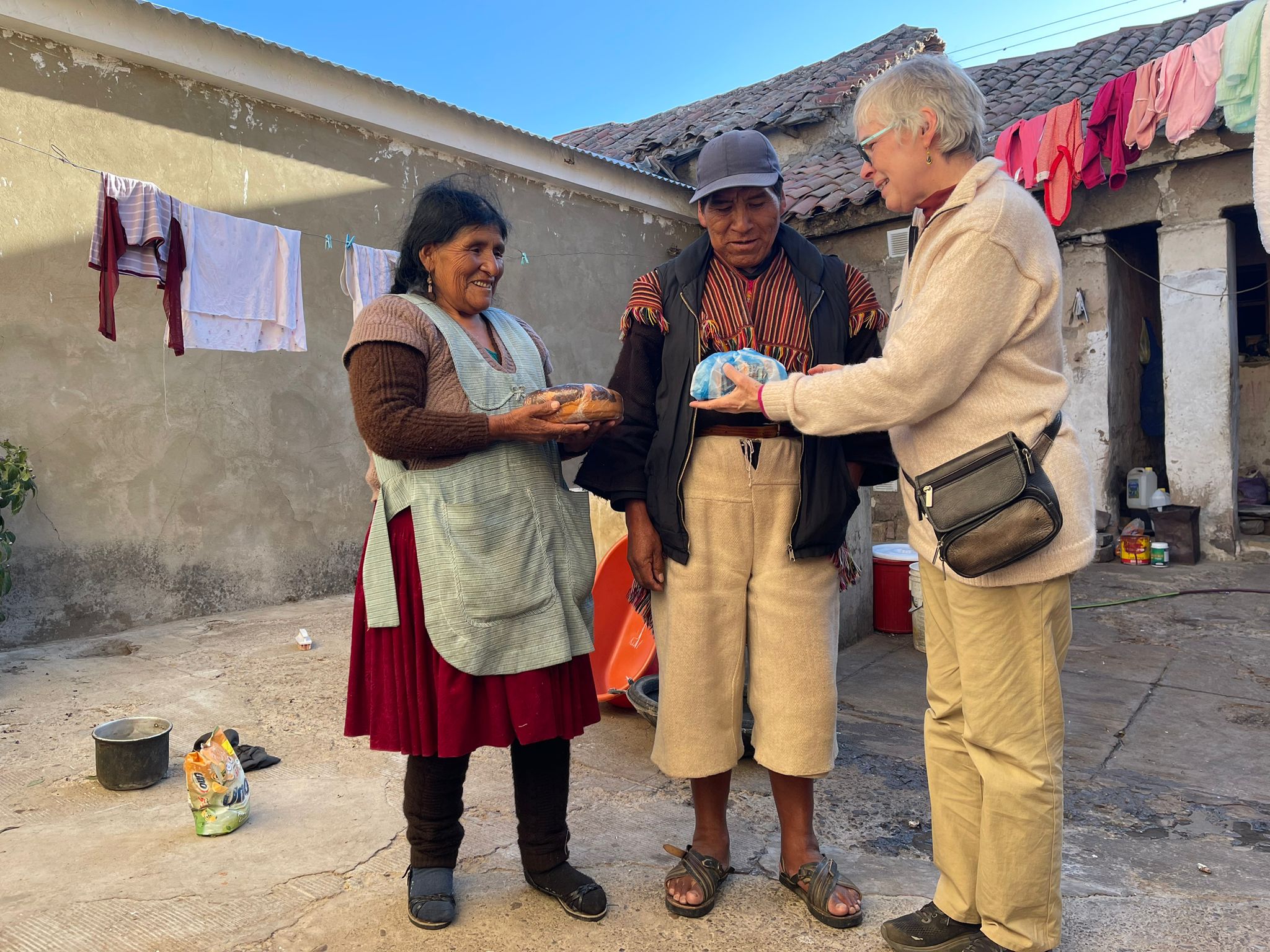
Mama Faustina, Tata Lorenzo Ilafaya accept our visit and agree to host a meeting
Meeting in Tarabuco with leaders from Jatun Churicana, hosted by Lorenzo’s family and assisted by Tata Casto Limachi from Nación Yampara

Once we got to the Tarabuco municipality in Bolivia, we tried to scheduled a single big meeting with leaders and school council members from three different communities. It was scheduled for Sunday – market day – on which most people bring their wares to a small town. We were advised that at the end of a Sunday we should be able to gather the majority of people in one place.

As it turned out, though, we ended up needing to meet with quite a few of the leaders and authorities in their own homes or community spaces – people’s lives were just too busy, community rivalries intense and we were a bit too unfamiliar to warrant a big meeting. Would you give up your Sunday afternoon plans for someone from out of town who had last visited you six, eight or even fifteen years ago?

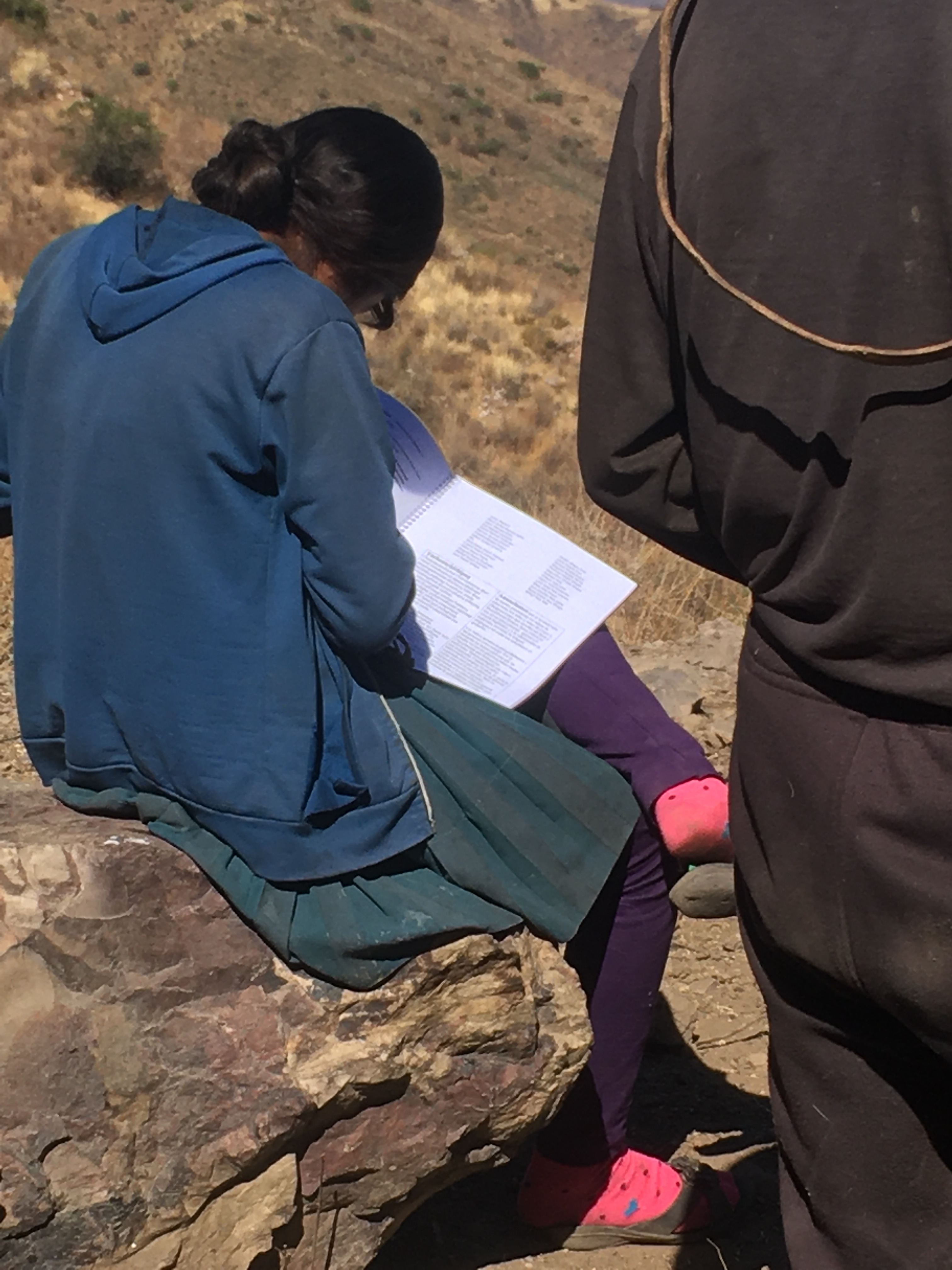
Once together, there was only one leader who gave us the proverbial cold shoulder, coming to meet with us on the road below his house but declining to walk forward and extend a greeting. Still, we did walk all the way up to his house and his wife offered each of us a bowl of steaming grains and legumes for breakfast. One of his daughters looked eagerly at the booklet we brought; she and her brothers as well as their father were among the people we had recorded in 2016 and 18. She inquired about attending our talk at the university the following week.

Former interviewee finds her name in our booklet

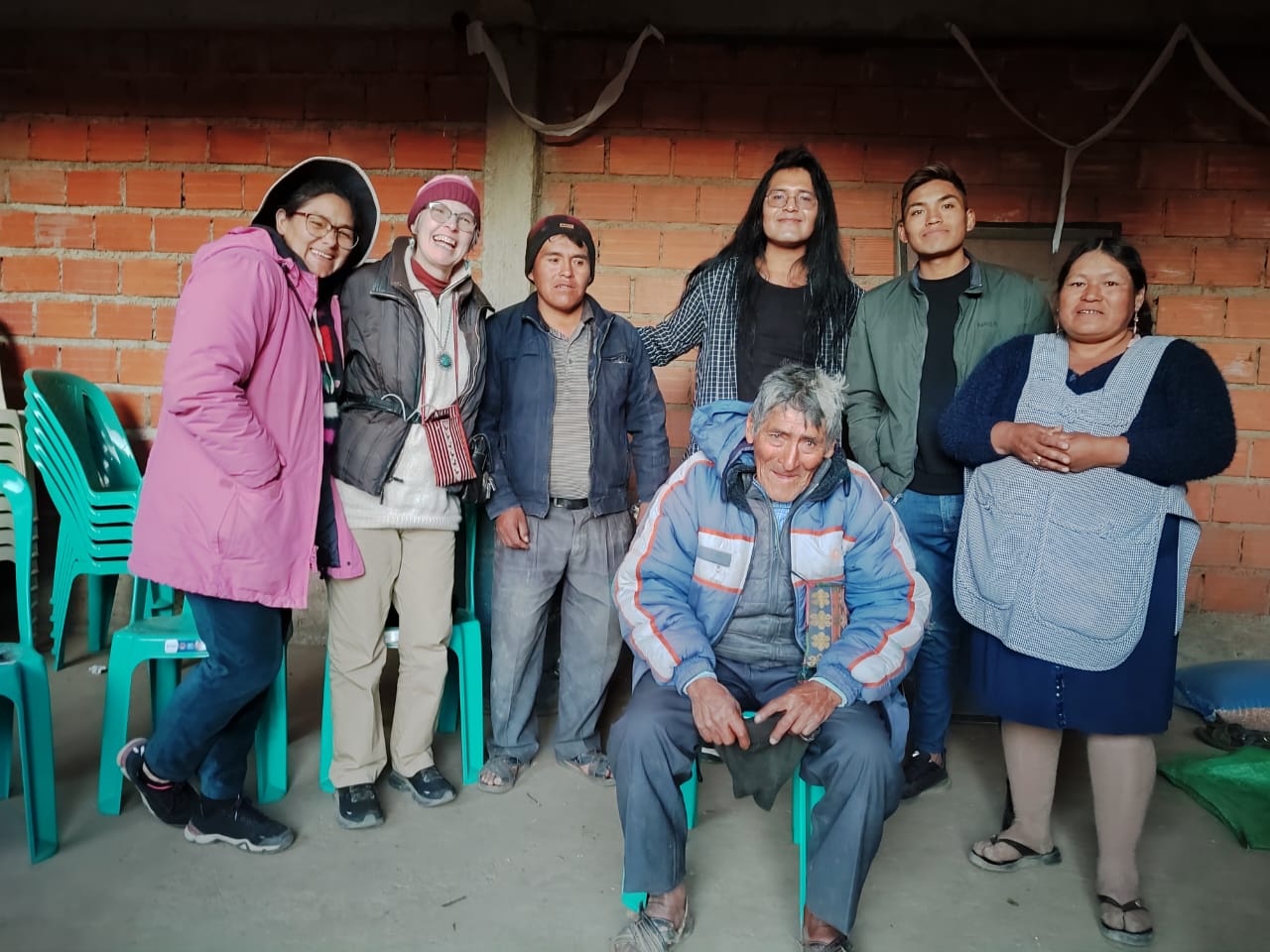
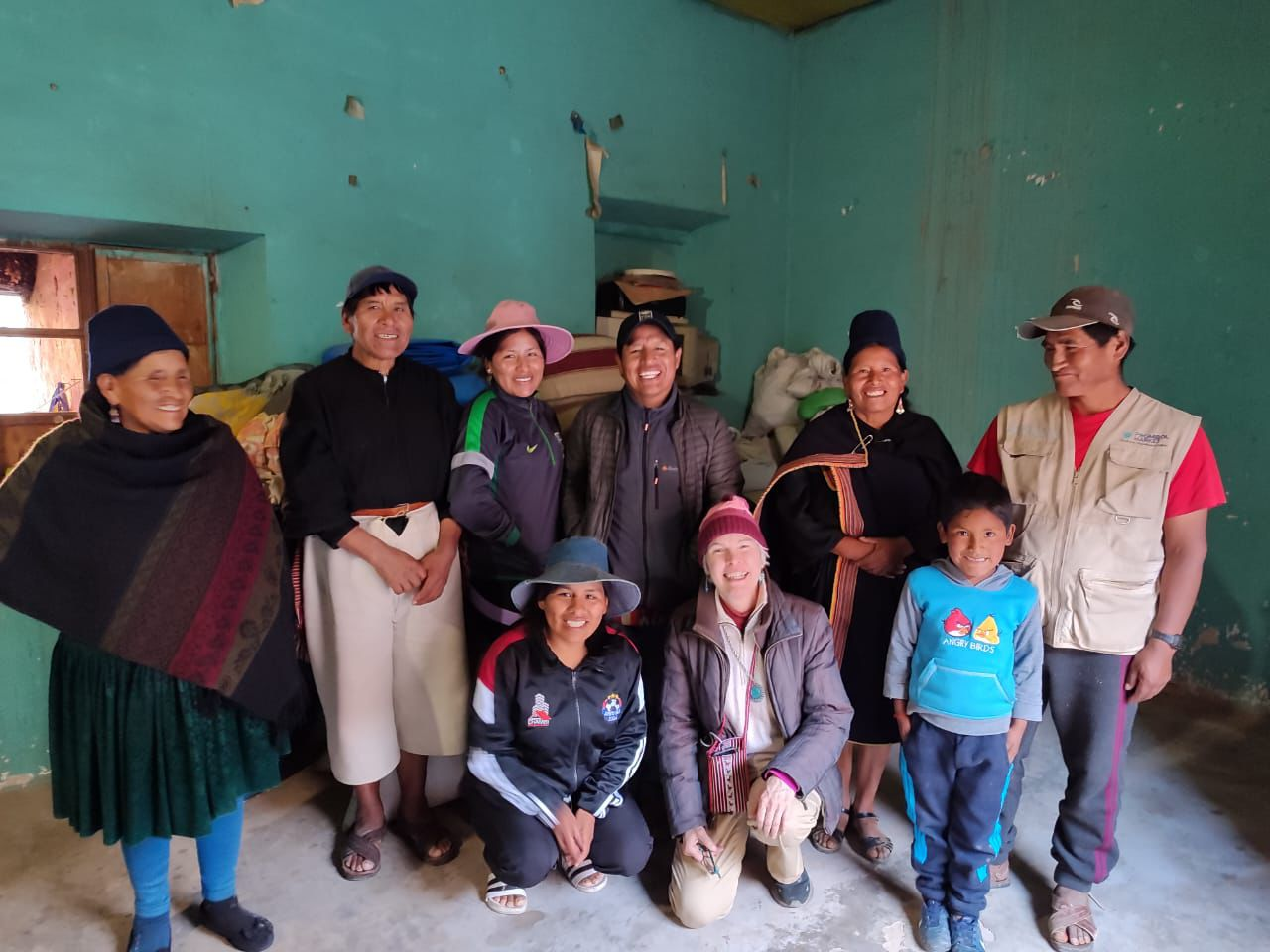
The most gratifying visit was to the home of a community leader whose interview I remembered for the long, humorous and philosophical monologue he had produced in response to one of our story books. In July we visited his house in twice, and it wasn’t till the second time that I realized that the older gentleman toasting grains over an open fire in his yard was his father and one of my other favorite interviewees! In fact we had selected excerpts from both of their interviews for the trilingual booklet. The visit had even more surprises; I realized we had also interviewed his wife without knowing they were all related.

Three generations of Yachay Simi interviewees in one family! Reunited in 2024.

This farmer had two grown sons; one of them is a senior studying history at the university in the city of Sucre. The other brother is already a lawyer. Both young men were excited to hear that their interviews had been published – that their words and culture would be shared and mean something to others. They remembered with enthusiasm being recorded by us (2009) as children in the late Prof. Rene’s class. I had my own memories of Prof. Rene; he had welcomed me back two years later (2011) for a weeklong residency at the school and had allowed me to participate in a full day’s classroom activities. School residencies, up close and experiential, are the best way to figure out whether the materials you are producing are suitable for use in the contexts they are developed for.

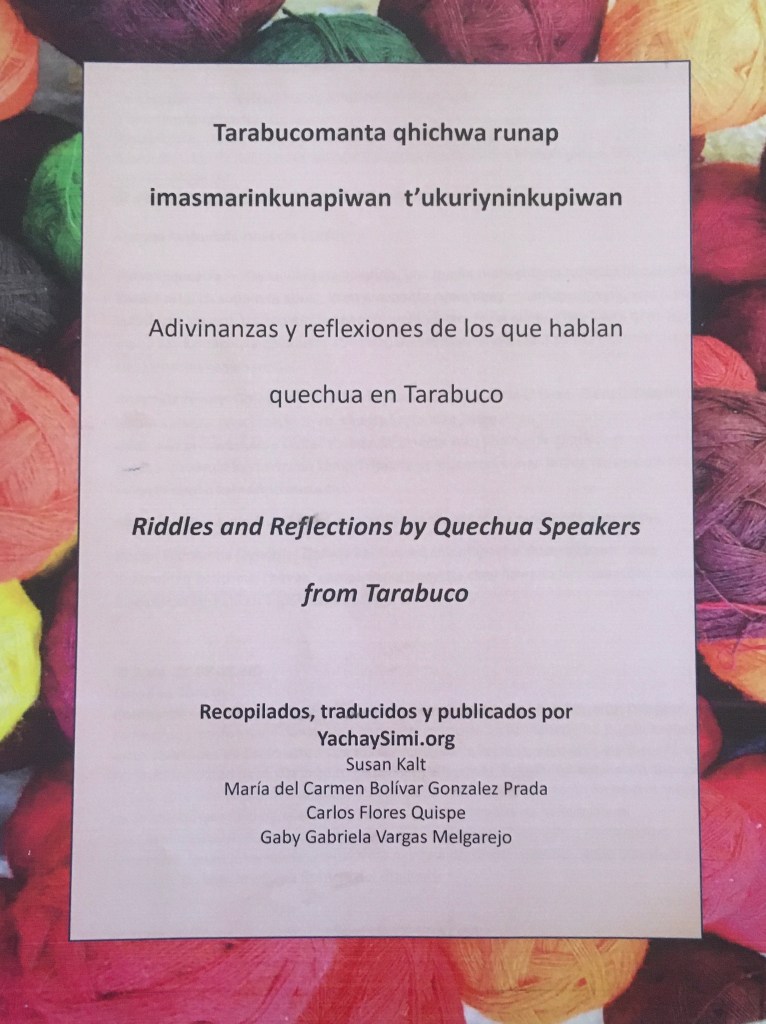
The booklet we returned to folks this year is in their own words, and has already been well received. Click on the image below to read the book.

Here is the link to our booklet, in Quechua, Spanish and English!

Car trouble

Nothing can stop us!

This is the first time I’ve traveled in the Bolivian countryside with someone who has their own truck. On previous trips I have traveled the same roads on foot, which is definitely the best way to see things and get a visceral feel for them. However, it’s grueling and time consuming. Plus, you can’t carry much in the way of gifts and books when traveling on foot. In the past, I’ve also shared rides with others in the beds of livestock trucks and pickup trucks, and squeezed inside crowded vans.

Traveling in Carlos’ pickup truck I was fortunate to have an attentive driver – he even made sure my seatbelt was buckled!

I learned that Bolivian vehicles have two different fuel burning options: gasoline and natural gas. Depending on the steepness of the incline, the driver will choose one or the other. Natural gas is cheaper.

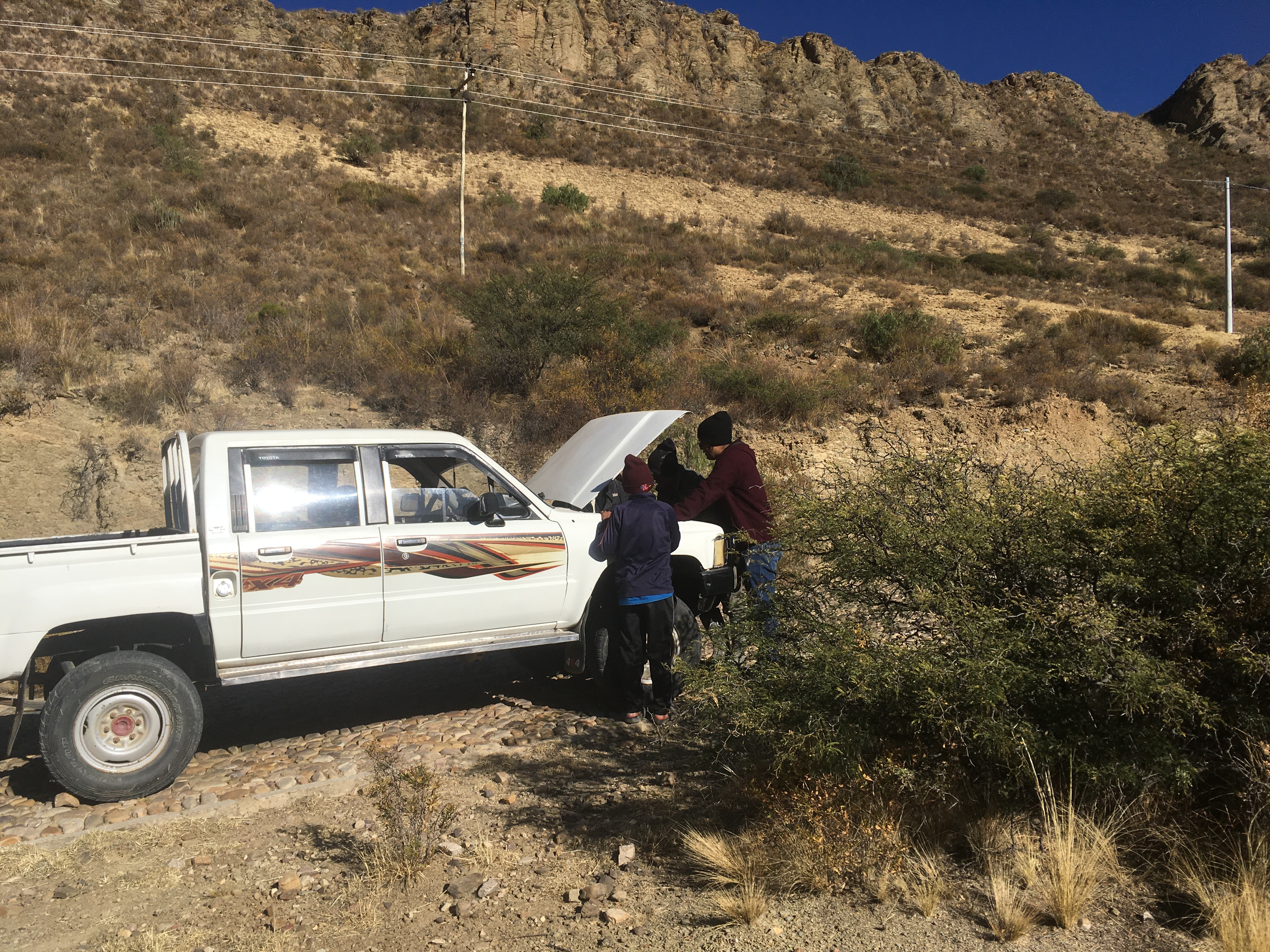
Carlos learned a lot about rural driving and auto mechanics on the job. At one point while bringing books and supplies from the city his hood popped open, blinding him. Luckily he was able to pull over without further incident, though the hood now needs repair. We also experienced the car overheating, the horn getting stuck in the ‘on’ position due to a melted cable, and an hour’s worth of navigating loose farm soil at the end of a driveway. That last situation required about six of us to figure out how to build tracks out of loose boards to get back to solid ground. Never a dull moment! And we always had our walking shoes ready…!

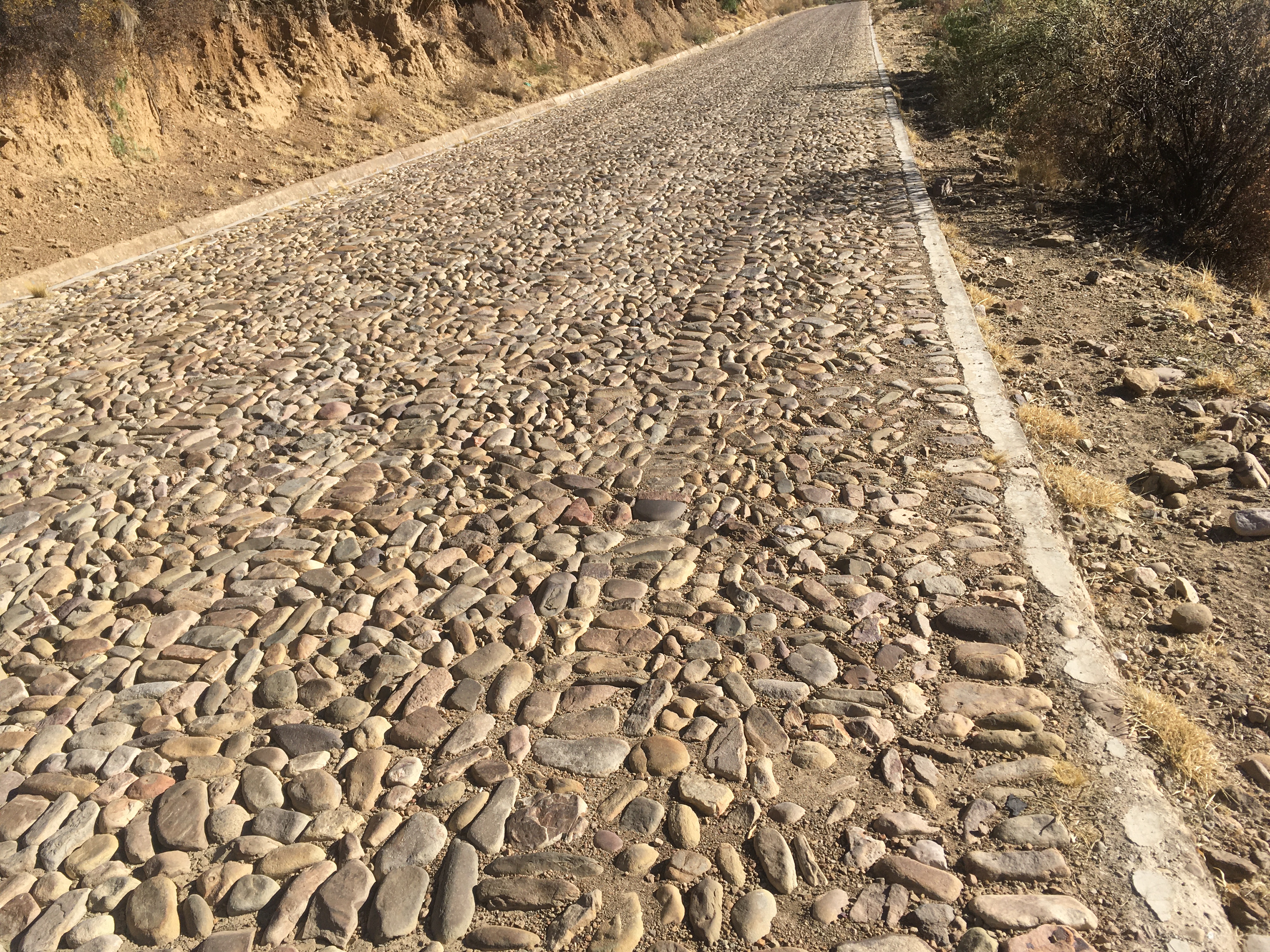
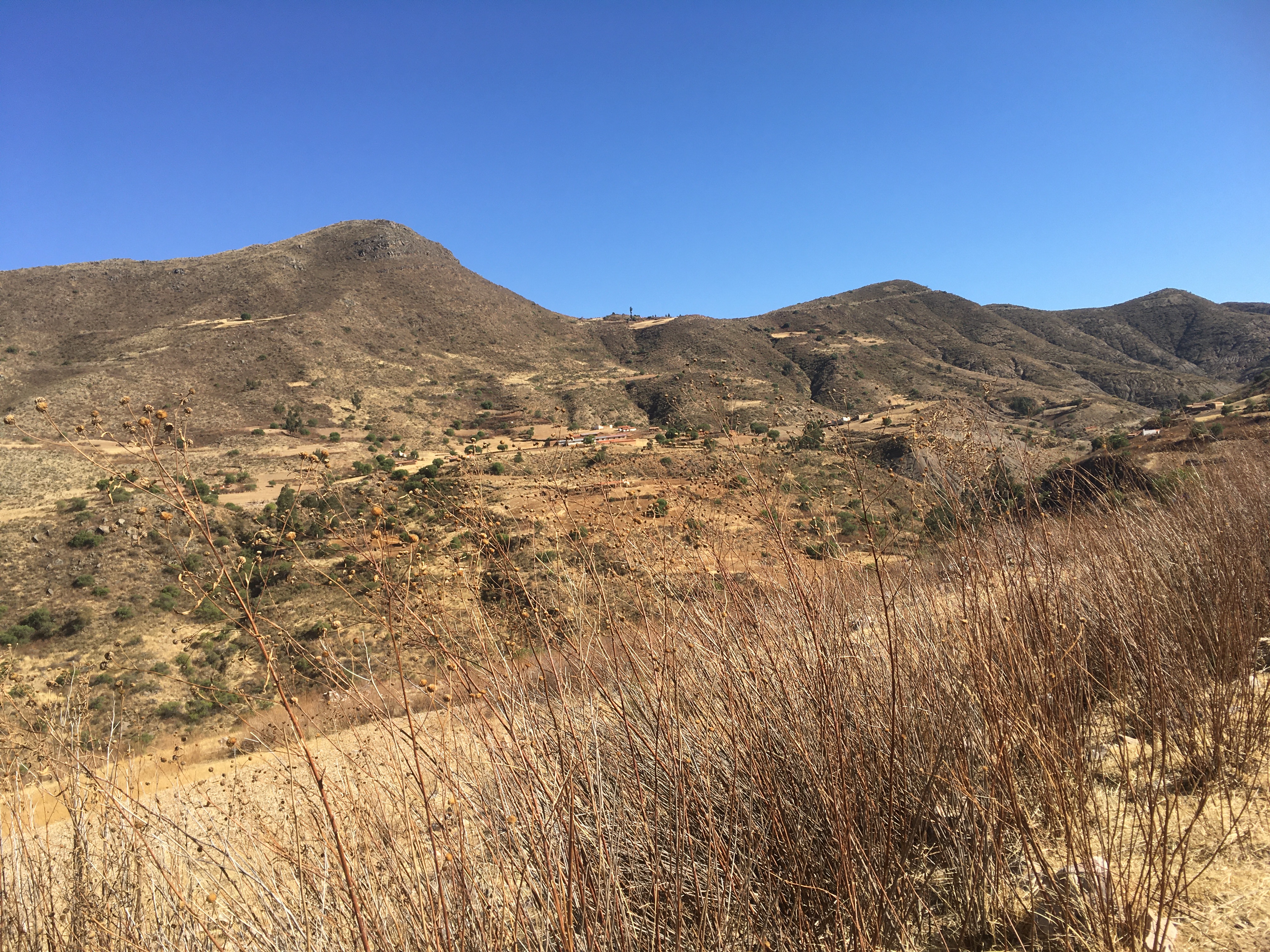
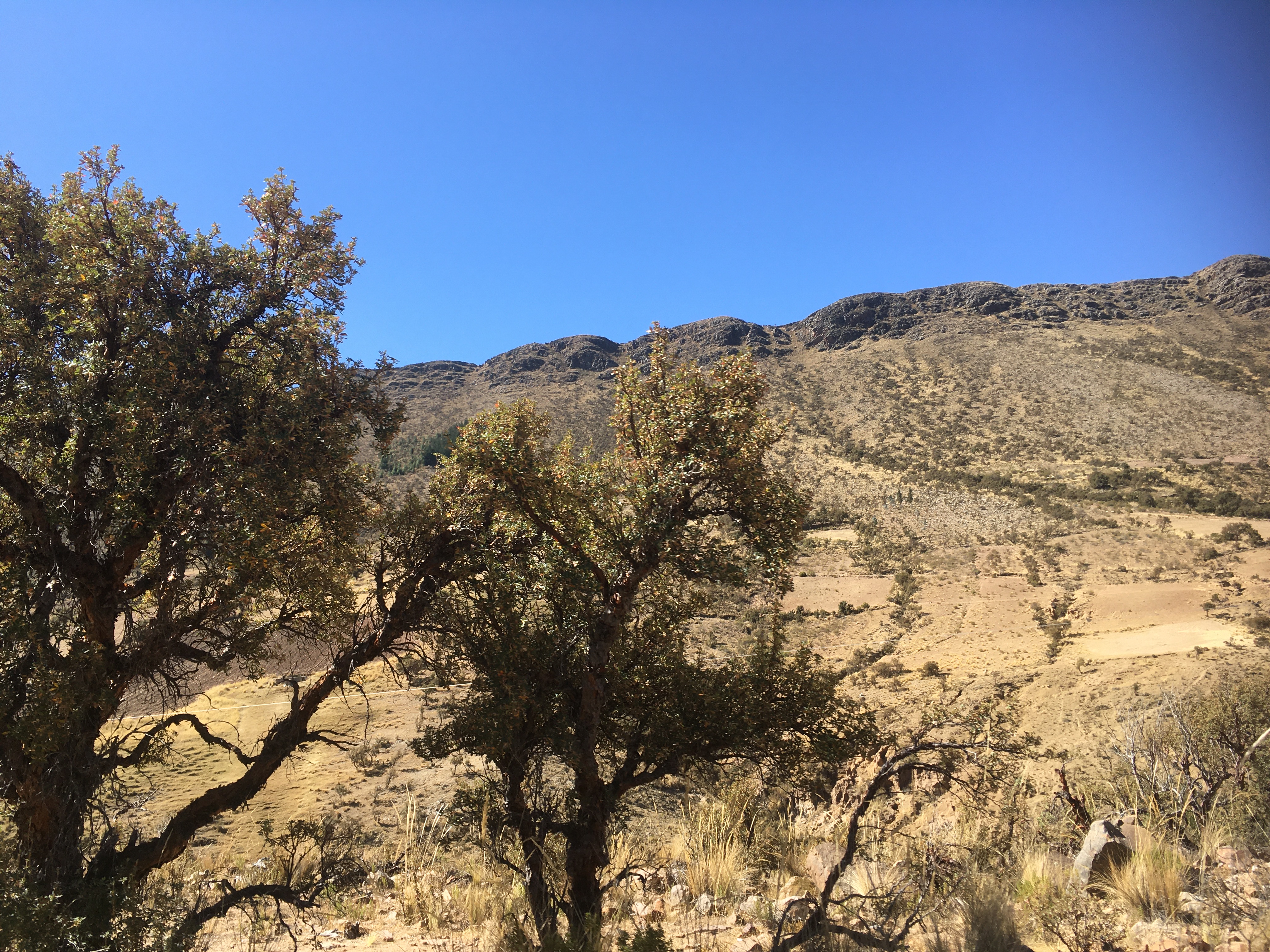
Here are some of the views from our travels.

Stone road
Distant farms
Qhiwiña trees